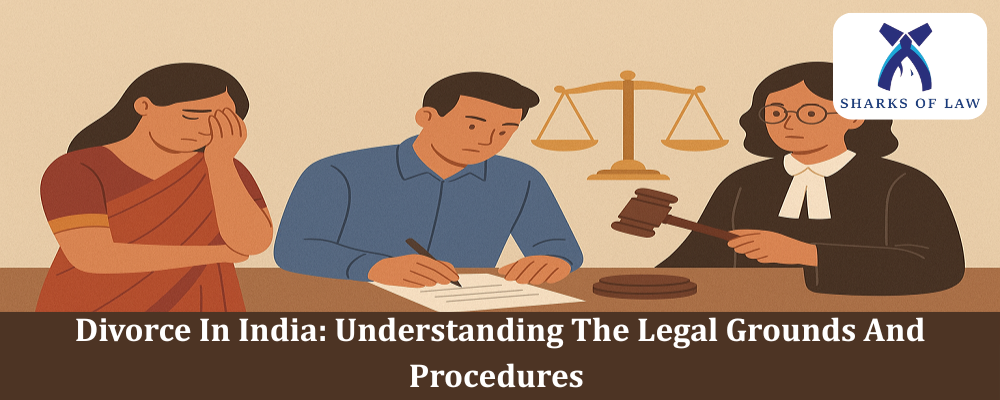
In India, the quickest and easiest method of ending a marriage is through mutual consent divorce. The process of obtaining a divorce by mutual consent has several important benefits.
Consult Verified Legal Experts

- • Court Marriage
- • Adoption & Custody
- • Mutual or Contested Divorce
Experience

- • RERA Matters
- • Legal Notice
- • Succession Issue
Experience

- • Anticipatory Bail
- • Money Recovery
- • Cheque Bounce
Experience

- • Anticipatory Bail
- • Money Recovery
- • Cheque Bounce
Experience

- • Agreements
- • Employment Matters
- • Statutory Compliances
Experience

- • Property Matter
- • Corporate Issues
- • Startup Compliances
Experience

- • Cyber Crime
- • Anticipatory Bail
- • Money Recovery
Experience

- • Audits
- • Trademark & other IP
- • Company Registration
Experience

- • Anticipatory Bail
- • Money Recovery
- • Cheque Bounce
Experience

- • Cyber Crime
- • Money Recovery
- • Cheque Bounce
Experience

- • RERA Matters
- • Consumer Protection
- • Legal Notice
Experience

- • RERA Matters
- • Case Transfer Matters
- • Legal Notice
Experience

- • Anticipatory Bail
- • Money Recovery
- • Cheque Bounce
Experience

- • Cyber Crime
- • Legal Notice
- • Succession Issue
Experience

- • Court Marriage
- • Adoption & Custody
- • Mutual or Contested Divorce
Experience

- • Cyber Fraud
- • Rape & POCSO
- • Bail Matter
Experience

- • Consumer Protection
- • Legal Notice
- • Succession Issue
Experience

- • Cyber Fraud
- • Property Matter
- • Corporate Issues
Experience

- • RERA Matters
- • Case Transfer Matters
- • Cyber Crime
Experience

- • Court Marriage
- • Adoption & Custody
- • Mutual or Contested Divorce
Experience

- • Agreements
- • Employment Matters
- • Statutory Compliances
Experience

- • Cyber Fraud
- • Rape & POCSO
- • Bail Matter
Experience

- • Cyber Fraud
- • Property Matter
- • Corporate Issues
Experience

- • Agreements
- • Employment Matters
- • Statutory Compliances
Experience

- • Insurance Matters
- • Cyber Fraud
- • Property Matter
Experience

- • Insurance Matters
- • Cyber Fraud
- • Property Matter
Experience

- • Cyber Fraud
- • Property Matter
- • Corporate Issues
Experience

- • Insurance Matters
- • Cyber Fraud
- • Rape & POCSO
Experience

- • Insurance Matters
- • Cyber Fraud
- • Corporate Issues
Experience

- • Court Marriage
- • Adoption & Custody
- • Mutual or Contested Divorce
Experience

- • Agreements
- • Employment Matters
- • Audits
Experience

- • Agreements
- • Employment Matters
- • Statutory Compliances
Experience

- • Court Marriage
- • Adoption & Custody
- • Bail Matter
Experience

- • Court Marriage
- • Adoption & Custody
- • Rape & POCSO
Experience

- • Matrimonial Disputes
- • Legal Notice
- • Succession Issue
Experience

- • Case Transfer Matters
- • Anticipatory Bail
- • Money Recovery
Experience

- • Cyber Crime
- • Money Recovery
- • Cheque Bounce
Experience

- • Insurance Matters
- • Rape & POCSO
- • Bail Matter
Experience

- • Court Marriage
- • Adoption & Custody
- • Mutual or Contested Divorce
Experience

- • Court Marriage
- • Adoption & Custody
- • Mutual or Contested Divorce
Experience

- • Rape & POCSO
- • Bail Matter
Experience

- • Agreements
- • Employment Matters
- • Statutory Compliances
Experience

- • Court Marriage
- • Adoption & Custody
- • Mutual or Contested Divorce
Experience

- • Agreements
- • Court Marriage
- • Adoption & Custody
Experience

- • Agreements
- • Employment Matters
- • RERA Matters
Experience

- • Employment Matters
- • Cyber Fraud
- • Cyber Crime
Experience

- • Employment Matters
- • Insurance Matters
- • Cyber Fraud
Experience

- • Adoption & Custody
- • Employment Matters
- • Insurance Matters
Experience

- • Bail Matter
Experience

- • Rape & POCSO
Experience

- • Insurance Matters
Experience

- • Adoption & Custody
Experience

- • Court Marriage
Experience

- • RERA Matters
- • Case Transfer Matters
- • Cyber Crime
Experience

- • Rape & POCSO
Experience

- • Insurance Matters
Experience

- • Rape & POCSO
Experience

- • Adoption & Custody
Experience

- • Property Matter
Experience

- • Property Matter
Experience

- • Adoption & Custody
Experience

- • Agreements
- • Anticipatory Bail
- • Case Transfer Matters
Experience

- • Insurance Matters
Experience

- • Employment Matters
- • Insurance Matters
- • RERA Matters
Experience

- • Court Marriage
- • Adoption & Custody
- • Legal Notice
Experience

- • Cyber Crime
- • Rape & POCSO
- • Anticipatory Bail
Experience

- • Rape & POCSO
- • Bail Matter
- • Legal Notice
Experience

- • Employment Matters
- • Company Registration
- • Legal Notice
Experience

- • Cyber Fraud
- • Cyber Crime
- • Legal Notice
Experience

- • Employment Matters
- • Insurance Matters
- • Legal Notice
Experience

- • Adoption & Custody
- • Matrimonial Disputes
- • Legal Notice
Experience

- • Anticipatory Bail
- • Audits
- • Cheque Bounce
Experience
If you've made the decision to get a divorce, you might be concerned about the cost of the divorce, the length of the process, and whether you've made the right choice. However, not all divorces are costly, distressing, or protracted.
Even after you've made the decision to separate, maintaining a cordial relationship with your spouse can make the divorce process simpler because there won't be a trial. A quick divorce is frequently the outcome of an amicable, or even somewhat amicable, divorce.
Mutual Consent Divorce: About
In order to initiate the divorce process, the parties must file a petition (under Section 13B of the Hindu Marriage Act, 1955) with the court along with affidavits attesting to the fact that they haven't been able to cohabitate as husband and wife for a year, or longer if necessary, and that they have mutually agreed to pursue a divorce.
- Terms of a settlement pertaining to all rights and obligations should be included in the mutual divorce settlement agreement, specifically:
- Child custody (which may be exclusive, shared, or joint);
- Maintenance/Alimony (neither a minimum nor a maximum amount specified);
- Litigation expenses; and
- Property
Mutual Consent Divorce: Required Documents
- Photographs of the couple together.
- Marriage certificates, marriage invitation cards, and marriage photos are examples of proof of marriage.
- ID proof in both original and duplicate forms, such as a voter ID card, passport, or Aadhar card.
- Memorandum of Understanding or Settlement Agreement (MOU).
Mutual Divorce Process
- Hiring a Divorce Lawyer: Hire an experienced and capable divorce lawyer to handle every aspect of the process, including drafting the petition, filing it, representing you in court on hearing dates, coordinating with the other party, etc.
- Serve the Mutual Divorce Petition: Serve a mutual consent divorce petition to a family court with the necessary paperwork.
- Hearing Date: The family court is in charge of reviewing documents. The case is advanced and a date for the first hearing is set after the family court has reviewed the documents in a satisfactory manner.
- Cooling-Off Period: After hearing arguments, the court orders both parties to begin a six-month mandatory cooling-off period.
- Proceeding with Mutual Consent Divorce: After the cooling-off period has passed, the family court permits both parties to proceed with the mutual divorce process.
- Recording of Statement of Oath: The court sets the next hearing date for both parties' statement of oaths to be recorded.
- Filing of Second Motion: Couples divorcing with mutual consent file for a second motion to be heard at the family court's final hearing.
- Divorce Decree: The family court records the parties' statements at the final hearing, at which point the marriage is dissolved and a divorce decree is issued.
Waiving of 6 Months Cooling Off Period
- The Supreme Court has upheld the possibility of the court nullifying the six-month period allotted to the parties. Stated differently, the court retains the authority to disregard the six-month duration.
- Therefore, it can be waived during these six months if the parties truly want to resolve their marital issues, such as alimony, child custody, or any other unresolved matters.
- In this case, the six months can also be waived, even though the court believes that the parties would suffer more the longer the waiting period.
It is a good idea to have a lawyer review your divorce settlement agreement if you are filing for an uncontested divorce to ensure that it is equitable and non-biased. Your spouse ought to have the agreement reviewed by a lawyer as well. You both need separate lawyers because one cannot represent you both. It would be best to look for another divorce lawyer if you are aware that a certain lawyer reviews documents more slowly than others.
You will also need the help of lawyers to draft your marriage separation agreement with caution by focusing on your rights after divorce.
Sharks of Law is a one-stop legal destination of repository of lawyers possessing the highest legal qualifications in divorce matters. The legal professionals at Sharks of Law have the necessary experience to offer you specialized knowledge in the areas of divorce cases where you need it.
Email:-helpdesk@sharksoflaw.com
Help Desk:-+91-88770-01993

Adv Vipul Singh Raghuwanshi
Legal expert and contributor at Sharks of Law. Committed to providing clear and accessible legal guidance to everyone.