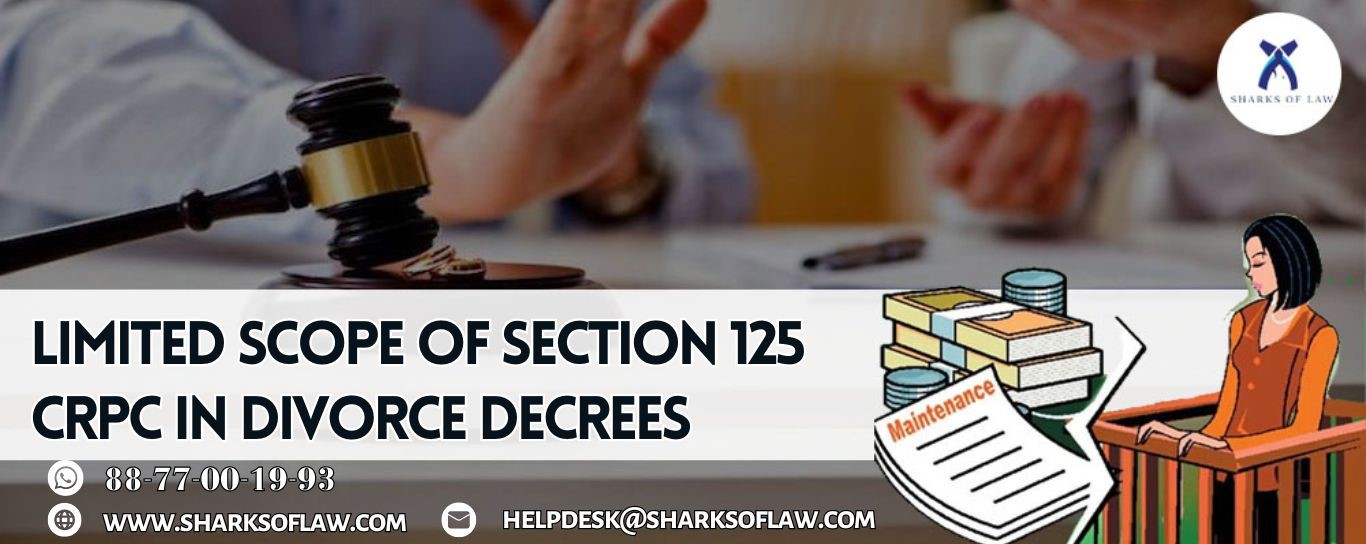
The Allahabad High Court in a recent judgment held that divorce cannot be granted under section 125 of Crpc. This section is limited to the issue of maintenance. Divorce can be granted under the Hindu Marriage Act. The Court also opined that the Parties cannot confer jurisdiction upon any court by consent if that court does not have jurisdiction.
Consult Verified Legal Experts

- • Bail Matter
- • Property Matter
- • Corporate Issues
Experience

- • Employment Matters
- • RERA Matters
- • Cyber Fraud
Experience

- • Adoption & Custody
- • Insurance Matters
- • Audits
Experience

- • Insurance Matters
- • Case Transfer Matters
- • Statutory Compliances
Experience

- • Employment Matters
- • Case Transfer Matters
- • Cyber Crime
Experience

- • Adoption & Custody
- • RERA Matters
- • Audits
Experience

- • Bail Matter
Experience

- • Mutual or Contested Divorce
Experience

- • Agreements
- • Court Marriage
- • Employment Matters
Experience

- • Court Marriage
- • Employment Matters
- • Cyber Fraud
Experience

- • Adoption & Custody
- • Insurance Matters
- • Cyber Fraud
Experience

- • Adoption & Custody
- • Insurance Matters
- • Anticipatory Bail
Experience

- • Adoption & Custody
- • RERA Matters
- • Statutory Compliances
Experience

- • Adoption & Custody
- • RERA Matters
- • Cyber Fraud
Experience

- • Statutory Compliances
- • Audits
- • Rape & POCSO
Experience

- • Court Marriage
- • Cyber Crime
- • Anticipatory Bail
Experience

- • Adoption & Custody
Experience

- • Corporate Issues
Experience

- • Employment Matters
- • RERA Matters
- • Case Transfer Matters
Experience

- • Rape & POCSO
Experience

- • Insurance Matters
Experience

- • Corporate Issues
Experience

- • Adoption & Custody
Experience

- • Corporate Issues
Experience

- • Insurance Matters
Experience

- • Adoption & Custody
Experience

- • Startup Compliances
Experience

- • Property Matter
Experience

- • Mutual or Contested Divorce
Experience

- • Rape & POCSO
Experience

- • Adoption & Custody
Experience

- • Cyber Fraud
- • Rape & POCSO
- • Anticipatory Bail
Experience

- • Anticipatory Bail
- • Bail Matter
- • Case Transfer Matters
Experience

- • Cyber Fraud
- • Rape & POCSO
- • Bail Matter
Experience

- • Agreements
- • Audits
- • Trademark & other IP
Experience

- • Cyber Fraud
- • Rape & POCSO
- • Bail Matter
Experience

- • Court Marriage
- • Adoption & Custody
- • Mutual or Contested Divorce
Experience

- • Court Marriage
- • Adoption & Custody
- • Mutual or Contested Divorce
Experience

- • Audits
- • Trademark & other IP
- • Company Registration
Experience

- • Anticipatory Bail
- • Money Recovery
- • Cheque Bounce
Experience

- • Money Recovery
- • Cheque Bounce
- • Matrimonial Disputes
Experience

- • Cyber Fraud
- • Rape & POCSO
- • Bail Matter
Experience

- • Insurance Matters
- • Cyber Fraud
- • Rape & POCSO
Experience

- • Court Marriage
- • Adoption & Custody
- • Mutual or Contested Divorce
Experience

- • Cyber Fraud
- • Rape & POCSO
- • Bail Matter
Experience

- • Anticipatory Bail
- • Money Recovery
- • Cheque Bounce
Experience

- • RERA Matters
- • Case Transfer Matters
- • Succession Issue
Experience

- • Consumer Protection
- • Legal Notice
- • Succession Issue
Experience

- • Insurance Matters
- • Cyber Fraud
- • Rape & POCSO
Experience

- • Agreements
- • Employment Matters
- • Statutory Compliances
Experience

- • Anticipatory Bail
- • Money Recovery
- • Cheque Bounce
Experience

- • Court Marriage
- • Adoption & Custody
- • Rape & POCSO
Experience

- • Agreements
- • Employment Matters
- • Statutory Compliances
Experience

- • Court Marriage
- • Adoption & Custody
- • Mutual or Contested Divorce
Experience

- • Cyber Crime
- • Anticipatory Bail
- • Money Recovery
Experience

- • Agreements
- • Employment Matters
- • Trademark & other IP
Experience

- • Money Recovery
- • Cheque Bounce
- • Legal Notice
Experience

- • Court Marriage
- • Adoption & Custody
- • Mutual or Contested Divorce
Experience

- • RERA Matters
- • Legal Notice
- • Succession Issue
Experience

- • Anticipatory Bail
- • Money Recovery
- • Cheque Bounce
Experience

- • Agreements
- • Employment Matters
- • Statutory Compliances
Experience

- • Property Matter
- • Corporate Issues
- • Startup Compliances
Experience

- • Cyber Crime
- • Anticipatory Bail
- • Money Recovery
Experience

- • Audits
- • Trademark & other IP
- • Company Registration
Experience

- • Anticipatory Bail
- • Money Recovery
- • Cheque Bounce
Experience

- • Cyber Crime
- • Money Recovery
- • Cheque Bounce
Experience

- • RERA Matters
- • Consumer Protection
- • Legal Notice
Experience

- • RERA Matters
- • Case Transfer Matters
- • Legal Notice
Experience

- • Anticipatory Bail
- • Money Recovery
- • Cheque Bounce
Experience

- • Cyber Crime
- • Legal Notice
- • Succession Issue
Experience

- • Court Marriage
- • Adoption & Custody
- • Mutual or Contested Divorce
Experience

- • Cyber Fraud
- • Rape & POCSO
- • Bail Matter
Experience

- • Consumer Protection
- • Legal Notice
- • Succession Issue
Experience

- • RERA Matters
- • Case Transfer Matters
- • Cyber Crime
Experience

- • Court Marriage
- • Adoption & Custody
- • Mutual or Contested Divorce
Experience

- • Agreements
- • Employment Matters
- • Statutory Compliances
Experience

- • Cyber Fraud
- • Rape & POCSO
- • Bail Matter
Experience

- • Cyber Fraud
- • Property Matter
- • Corporate Issues
Experience

- • Agreements
- • Employment Matters
- • Statutory Compliances
Experience

- • Insurance Matters
- • Cyber Fraud
- • Property Matter
Experience

- • Cyber Fraud
- • Property Matter
- • Corporate Issues
Experience

- • Insurance Matters
- • Cyber Fraud
- • Rape & POCSO
Experience

- • Insurance Matters
- • Cyber Fraud
- • Corporate Issues
Experience

- • Court Marriage
- • Adoption & Custody
- • Mutual or Contested Divorce
Experience

- • Agreements
- • Employment Matters
- • Audits
Experience

- • Agreements
- • Employment Matters
- • Statutory Compliances
Experience

- • Court Marriage
- • Adoption & Custody
- • Bail Matter
Experience

- • Court Marriage
- • Adoption & Custody
- • Rape & POCSO
Experience

- • Matrimonial Disputes
- • Legal Notice
- • Succession Issue
Experience

- • Case Transfer Matters
- • Anticipatory Bail
- • Money Recovery
Experience

- • Cyber Crime
- • Money Recovery
- • Cheque Bounce
Experience

- • Insurance Matters
- • Rape & POCSO
- • Bail Matter
Experience

- • Court Marriage
- • Adoption & Custody
- • Mutual or Contested Divorce
Experience

- • Court Marriage
- • Adoption & Custody
- • Mutual or Contested Divorce
Experience

- • Rape & POCSO
- • Bail Matter
Experience

- • Agreements
- • Employment Matters
- • Statutory Compliances
Experience

- • Court Marriage
- • Adoption & Custody
- • Mutual or Contested Divorce
Experience

- • Agreements
- • Court Marriage
- • Adoption & Custody
Experience

- • Agreements
- • Employment Matters
- • RERA Matters
Experience

- • Employment Matters
- • Cyber Fraud
- • Cyber Crime
Experience

- • Employment Matters
- • Insurance Matters
- • Cyber Fraud
Experience

- • Adoption & Custody
- • Employment Matters
- • Insurance Matters
Experience

- • Bail Matter
Experience

- • Rape & POCSO
Experience

- • Insurance Matters
Experience

- • Adoption & Custody
Experience

- • Court Marriage
Experience

- • RERA Matters
- • Case Transfer Matters
- • Cyber Crime
Experience

- • Rape & POCSO
Experience

- • Insurance Matters
Experience

- • Rape & POCSO
Experience

- • Adoption & Custody
Experience

- • Property Matter
Experience

- • Property Matter
Experience

- • Adoption & Custody
Experience

- • Insurance Matters
Experience

- • Employment Matters
- • Insurance Matters
- • RERA Matters
Experience

- • Court Marriage
- • Adoption & Custody
- • Legal Notice
Experience

- • Cyber Crime
- • Rape & POCSO
- • Anticipatory Bail
Experience
- • Rape & POCSO
- • Bail Matter
- • Legal Notice
Experience

- • Employment Matters
- • Company Registration
- • Legal Notice
Experience

- • Cyber Fraud
- • Cyber Crime
- • Legal Notice
Experience

- • Employment Matters
- • Insurance Matters
- • Legal Notice
Experience

- • Adoption & Custody
- • Matrimonial Disputes
- • Legal Notice
Experience

- • Court Marriage
- • Rape & POCSO
- • Matrimonial Disputes
Experience

- • Anticipatory Bail
- • Audits
- • Cheque Bounce
Experience
The Allahabad High Court in a recent judgment stated about the scope of section 125 crpc. Divorce by settlement cannot be claimed under this section. The Court stated that this section is limited to the maintenance payment to the deserted wife. Here, the Court only has the power to determine the amount of maintenance. So, the court cannot grant divorce under this section. The parties by their consent also cannot expand the jurisdiction of the court to confer the power to pass a decree of divorce. The parties cannot confer jurisdiction on a court if the court otherwise does not have jurisdiction.
Facts of the case:
Bhojraj Singh worked as an assistant teacher at Maharaja Tej Singh Junior High School, Aurandh, Vikash Khand Sultanganj, District Mainpuri. He retired on June 30, 2012, and died on October 2, 2021. The petitioner or appellant appeared. The case involves the payment of a family pension for a woman who has been married to the late Bhojraj Singh and has lived with him for several years. The petitioner-appellant argued that Bhojraj Singh's marriage to contesting private respondent Usha Devi did not work out due to matrimonial disputes and they separated. Usha Devi initiated a proceeding under Section 125 Cr.P.C., which led to a compromise and the parties' separation. It was argued that Usha Devi had no legal rights against the deceased employee after their separation. The deceased employee married the present petitioner-appellant. Various documents have been used to prove the fact of marriage. The petitioner-appellant presented a claim of Usha Devi's second marriage, which the private respondent disputes. The appellant claimed to have obtained a succession certificate and used it to claim a family pension, but the authorities rejected their claim. The writ petition challenging the order has also been dismissed.
The Single Judge ruled that Bhojraj Singh and Usha Devi's marriage could only be dissolved through a competent court decree, and cannot be annulled under Section 125 Cr. P.C. as divorce under section 125 cannot be done. The appellant's claim based on a second marriage was rejected. The appellant, the later wife, filed an appeal after being dissatisfied with the single judge's decision.
Issue:
Whether Bhojraj Singh and Usha Devi's marriage be dissolved through a compromise under Section 125 Cr.P.C.?
Legal provision:
Section 125 of the CRPC establishes a secular law for the maintenance of wife, child, or parents. This section aids in providing monetary assistance to the vulnerable, thereby avoiding situations such as vagrancy and poverty. So, objectively, the CRPC's maintenance clause seeks to advance social justice and protect vulnerable people who are unable to provide for themselves.
Judgment:
The Court held that the parties are Hindus and their marriage will follow the Hindu Marriage Act of 1955. The late Bhojraj Singh and Usha Devi were capable of forming a marriage alliance, which they did. the marriage between the parties is governed by the Hindu Marriage Act, of 1955, and can only be dissolved through a court decree. No competent court has ever issued such a decree. The parties' marriage could not have been dissolved based solely on an alleged compromise. The appellant's counsel relies on the Supreme Court's decision in Deoki Panjhiyara in which the appellant claimed that the first marriage was void because the other party was already married to Rohit Kumar Mishra and the second marriage was performed during the previous marriage, which was void. After identifying the conditions of a valid marriage, the Court determined that if the previous marriage was void, a competent court declaration of nullity or annulment was not necessary.
Bhojraj Singh and Usha Devi's marriage was their first, and neither party was deemed incapable of contracting it. The nullity of the marriage plea does not apply in this case. The respondents dispute the claim that Usha Devi contracted marriage after a certain point in time.
The Sharks of Law teaches people about legal issues and fosters critical thinking. We provide Legal Consultation. You can find a lawyer here.
Email:-helpdesk@sharksoflaw.com
Help Desk:-+91-88770-01993

Adv Vipul Singh Raghuwanshi
Legal expert and contributor at Sharks of Law. Committed to providing clear and accessible legal guidance to everyone.