Court Marriages in India do not require parents’ presence or involvement from the procedure, nor are they excluded from the entire procedure as well. Nowadays court marriages are being opted as an alternative to traditional weddings in many cases. Call Now For Advice On Court Marriage:-91-8877001993
Consult Verified Legal Experts

- • Bail Matter
- • Property Matter
- • Corporate Issues
Experience

- • Employment Matters
- • RERA Matters
- • Cyber Fraud
Experience

- • Adoption & Custody
- • Insurance Matters
- • Audits
Experience

- • Insurance Matters
- • Case Transfer Matters
- • Statutory Compliances
Experience

- • Employment Matters
- • Case Transfer Matters
- • Cyber Crime
Experience

- • Adoption & Custody
- • RERA Matters
- • Audits
Experience

- • Bail Matter
Experience

- • Mutual or Contested Divorce
Experience

- • Agreements
- • Court Marriage
- • Employment Matters
Experience

- • Court Marriage
- • Employment Matters
- • Cyber Fraud
Experience

- • Adoption & Custody
- • Insurance Matters
- • Cyber Fraud
Experience

- • Adoption & Custody
- • Insurance Matters
- • Anticipatory Bail
Experience

- • Adoption & Custody
- • RERA Matters
- • Statutory Compliances
Experience

- • Adoption & Custody
- • RERA Matters
- • Cyber Fraud
Experience

- • Statutory Compliances
- • Audits
- • Rape & POCSO
Experience

- • Court Marriage
- • Cyber Crime
- • Anticipatory Bail
Experience

- • Adoption & Custody
Experience

- • Corporate Issues
Experience

- • Employment Matters
- • RERA Matters
- • Case Transfer Matters
Experience

- • Rape & POCSO
Experience

- • Insurance Matters
Experience

- • Corporate Issues
Experience

- • Adoption & Custody
Experience

- • Corporate Issues
Experience

- • Insurance Matters
Experience

- • Adoption & Custody
Experience

- • Startup Compliances
Experience

- • Property Matter
Experience

- • Mutual or Contested Divorce
Experience

- • Rape & POCSO
Experience

- • Adoption & Custody
Experience

- • Cyber Fraud
- • Rape & POCSO
- • Anticipatory Bail
Experience

- • Anticipatory Bail
- • Bail Matter
- • Case Transfer Matters
Experience

- • Cyber Fraud
- • Rape & POCSO
- • Bail Matter
Experience

- • Agreements
- • Audits
- • Trademark & other IP
Experience

- • Cyber Fraud
- • Rape & POCSO
- • Bail Matter
Experience

- • Court Marriage
- • Adoption & Custody
- • Mutual or Contested Divorce
Experience

- • Court Marriage
- • Adoption & Custody
- • Mutual or Contested Divorce
Experience

- • Audits
- • Trademark & other IP
- • Company Registration
Experience

- • Anticipatory Bail
- • Money Recovery
- • Cheque Bounce
Experience

- • Money Recovery
- • Cheque Bounce
- • Matrimonial Disputes
Experience

- • Cyber Fraud
- • Rape & POCSO
- • Bail Matter
Experience

- • Insurance Matters
- • Cyber Fraud
- • Rape & POCSO
Experience

- • Court Marriage
- • Adoption & Custody
- • Mutual or Contested Divorce
Experience

- • Cyber Fraud
- • Rape & POCSO
- • Bail Matter
Experience

- • Anticipatory Bail
- • Money Recovery
- • Cheque Bounce
Experience

- • RERA Matters
- • Case Transfer Matters
- • Succession Issue
Experience

- • Consumer Protection
- • Legal Notice
- • Succession Issue
Experience

- • Insurance Matters
- • Cyber Fraud
- • Rape & POCSO
Experience

- • Agreements
- • Employment Matters
- • Statutory Compliances
Experience

- • Anticipatory Bail
- • Money Recovery
- • Cheque Bounce
Experience

- • Court Marriage
- • Adoption & Custody
- • Rape & POCSO
Experience

- • Agreements
- • Employment Matters
- • Statutory Compliances
Experience

- • Court Marriage
- • Adoption & Custody
- • Mutual or Contested Divorce
Experience

- • Cyber Crime
- • Anticipatory Bail
- • Money Recovery
Experience

- • Agreements
- • Employment Matters
- • Trademark & other IP
Experience

- • Money Recovery
- • Cheque Bounce
- • Legal Notice
Experience

- • Court Marriage
- • Adoption & Custody
- • Mutual or Contested Divorce
Experience

- • RERA Matters
- • Legal Notice
- • Succession Issue
Experience

- • Anticipatory Bail
- • Money Recovery
- • Cheque Bounce
Experience

- • Agreements
- • Employment Matters
- • Statutory Compliances
Experience

- • Property Matter
- • Corporate Issues
- • Startup Compliances
Experience

- • Cyber Crime
- • Anticipatory Bail
- • Money Recovery
Experience

- • Audits
- • Trademark & other IP
- • Company Registration
Experience

- • Anticipatory Bail
- • Money Recovery
- • Cheque Bounce
Experience

- • Cyber Crime
- • Money Recovery
- • Cheque Bounce
Experience

- • RERA Matters
- • Consumer Protection
- • Legal Notice
Experience

- • RERA Matters
- • Case Transfer Matters
- • Legal Notice
Experience

- • Anticipatory Bail
- • Money Recovery
- • Cheque Bounce
Experience

- • Cyber Crime
- • Legal Notice
- • Succession Issue
Experience

- • Court Marriage
- • Adoption & Custody
- • Mutual or Contested Divorce
Experience

- • Cyber Fraud
- • Rape & POCSO
- • Bail Matter
Experience

- • Consumer Protection
- • Legal Notice
- • Succession Issue
Experience

- • RERA Matters
- • Case Transfer Matters
- • Cyber Crime
Experience

- • Court Marriage
- • Adoption & Custody
- • Mutual or Contested Divorce
Experience

- • Agreements
- • Employment Matters
- • Statutory Compliances
Experience

- • Cyber Fraud
- • Rape & POCSO
- • Bail Matter
Experience

- • Cyber Fraud
- • Property Matter
- • Corporate Issues
Experience

- • Agreements
- • Employment Matters
- • Statutory Compliances
Experience

- • Insurance Matters
- • Cyber Fraud
- • Property Matter
Experience

- • Cyber Fraud
- • Property Matter
- • Corporate Issues
Experience

- • Insurance Matters
- • Cyber Fraud
- • Rape & POCSO
Experience

- • Insurance Matters
- • Cyber Fraud
- • Corporate Issues
Experience

- • Court Marriage
- • Adoption & Custody
- • Mutual or Contested Divorce
Experience

- • Agreements
- • Employment Matters
- • Audits
Experience

- • Agreements
- • Employment Matters
- • Statutory Compliances
Experience

- • Court Marriage
- • Adoption & Custody
- • Bail Matter
Experience

- • Court Marriage
- • Adoption & Custody
- • Rape & POCSO
Experience

- • Matrimonial Disputes
- • Legal Notice
- • Succession Issue
Experience

- • Case Transfer Matters
- • Anticipatory Bail
- • Money Recovery
Experience

- • Cyber Crime
- • Money Recovery
- • Cheque Bounce
Experience

- • Insurance Matters
- • Rape & POCSO
- • Bail Matter
Experience

- • Court Marriage
- • Adoption & Custody
- • Mutual or Contested Divorce
Experience

- • Court Marriage
- • Adoption & Custody
- • Mutual or Contested Divorce
Experience

- • Rape & POCSO
- • Bail Matter
Experience

- • Agreements
- • Employment Matters
- • Statutory Compliances
Experience

- • Court Marriage
- • Adoption & Custody
- • Mutual or Contested Divorce
Experience

- • Agreements
- • Court Marriage
- • Adoption & Custody
Experience

- • Agreements
- • Employment Matters
- • RERA Matters
Experience

- • Employment Matters
- • Cyber Fraud
- • Cyber Crime
Experience

- • Employment Matters
- • Insurance Matters
- • Cyber Fraud
Experience

- • Adoption & Custody
- • Employment Matters
- • Insurance Matters
Experience

- • Bail Matter
Experience

- • Rape & POCSO
Experience

- • Insurance Matters
Experience

- • Adoption & Custody
Experience

- • Court Marriage
Experience

- • RERA Matters
- • Case Transfer Matters
- • Cyber Crime
Experience

- • Rape & POCSO
Experience

- • Insurance Matters
Experience

- • Rape & POCSO
Experience

- • Adoption & Custody
Experience

- • Property Matter
Experience

- • Property Matter
Experience

- • Adoption & Custody
Experience

- • Insurance Matters
Experience

- • Employment Matters
- • Insurance Matters
- • RERA Matters
Experience

- • Court Marriage
- • Adoption & Custody
- • Legal Notice
Experience

- • Cyber Crime
- • Rape & POCSO
- • Anticipatory Bail
Experience

- • Rape & POCSO
- • Bail Matter
- • Legal Notice
Experience

- • Employment Matters
- • Company Registration
- • Legal Notice
Experience

- • Cyber Fraud
- • Cyber Crime
- • Legal Notice
Experience

- • Employment Matters
- • Insurance Matters
- • Legal Notice
Experience

- • Adoption & Custody
- • Matrimonial Disputes
- • Legal Notice
Experience

- • Court Marriage
- • Rape & POCSO
- • Matrimonial Disputes
Experience

- • Anticipatory Bail
- • Audits
- • Cheque Bounce
Experience
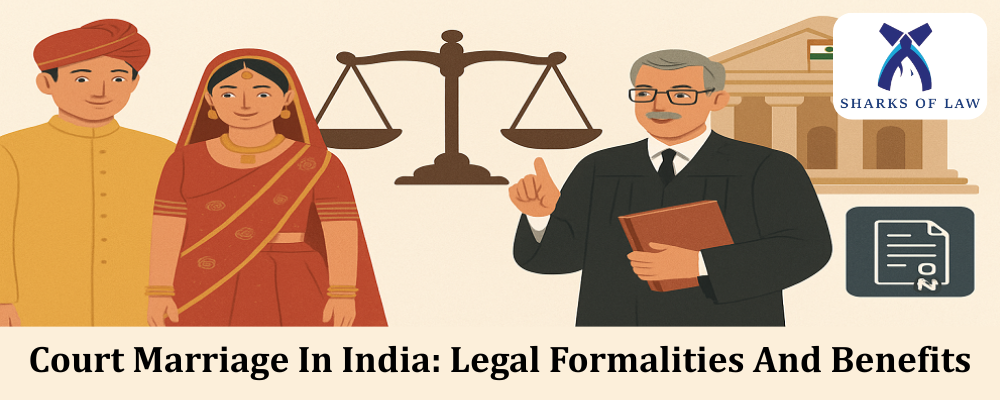
Often regarded as official or legal marriage, Court Marriages are becoming popular as they are simple in nature, offer low cost and are legally valid. Special Marriage Act, 1954, provides for the provision of Court Marriage in India. As per the provision of the Act, individuals belonging to different religion, caste or background could apply for court marriage together. In case you need assistance with the procedure or filing paperwork, you may contact us at Sharks of Law.
Due to various reasons, there are some common misconceptions among people regarding court marriages, one of them being that the parents or families of the couple cannot get involved in the process. Contrary to the myth, families could play major role in Court Marriages, with the following discussion debunking such beliefs-
Court Marriages in India
A court marriage could be understood as the marriage which is performed in the Court of law falling under the Special Marriage Act. Court Marriages are often opted by the couples who do not wish to follow through a religious ceremony as they belong to different religions or communities. The procedure of the Court Marriage includes the registration of marriage in the presence of the Marriage Officer, with the marriage being legally valid without having to perform the customary rituals and traditions.
To have a better understanding of the process or the necessary paperwork, it is advised to seek appropriate legal counsel from experienced court marriage advocates at the Sharks of the Law.
Court Marriages and the Role of Families
Out of many reasons behind the misconception that the families are not allowed to be involved with the court marriage process is misunderstanding or lack of awareness of the procedure of court marriage. Though traditional wedding rituals are not a requirement for the court marriages, families however can still be a part of the entire process, ensuring that the marriage is conducted in a smooth manner as per the law-
1. Consent and Support of the Family
In the Indian society approval of the family members, especially parents, is important in an individual’s marriage, as is the case with the Court Marriages. Although, according to the provisions of the Act, it is not necessary for the families to agree to the marriage between the couple, it is advised for the parties to have their families involved with the entire process if possible, especially in case there is a possibility of opposition for marriage of families part.
Presence of family members during the registration process would be supportive of the couple’s decision.
2. Witnesses to the Marriage
As per the provisions of the Special Marriage Act, the couple after completing the necessary formalities would have to appear before the Marriage Officer on the date so provided, sign the necessary documents with two witnesses present.
The witnesses for a Court Marriage are generally the friends or family members of the couple as per their wish. It must be noted here that these witnesses should not be direct relatives of the couple, i.e. parents or siblings, but other close relatives or friends.
3. Paperwork and Formalities
Although elaborate rituals or customary practices are not necessary during the court marriage, families could be supportive, often playing an important role during the formalities including gathering necessary documents such as identity proofs, residential address of the parties, age proof, other affidavits, etc.
For further information related to the documents required as well as the proper procedure for the same, it is advised that you seek experienced court marriage lawyers at Sharks of Law.
The Myth
In the past most couples opting for court marriage were those who wished to get married without permission or support from their families, or belonged to different castes or religion, hence without any involvement of their families, hence the common belief that the families do not get be involved in the process.
Nowadays, the couples, amongst other reasons, are going for court marriage, as their marriage would be legally valid providing them with a marriage certificate at the end which otherwise they will have to apply for separately, also the entire procedure would be a private affair, without having to waste unnecessary amount of money or time.
However, court marriage is more about the legal procedures and paperwork sidelining the various customs and traditions, which the couple could still perform if they wish to after completing the formalities. It will always be a good thing to have the families involved with the biggest decision of your lives.
Conclusion
To conclude, court marriages in India do not require parents’ presence or involvement from the procedure, nor are they excluded from the entire procedure as well. Nowadays court marriages are being opted as an alternative to traditional weddings in many cases.
And as in any other marriage, it has to noted that the presence of family is not only possible but also necessary to have their blessings and support.
Sharks of Law offers you expert legal services for court marriages in India, hence ensuring that you could get married with minimum hassle. Experienced advocates at the Sharks of Law offer you appropriate free legal counsel, personalised assistance during the entire process, with necessary paperwork, or any other legal procedure, hence ensuring that you could get married with minimum hassle.
Email:-helpdesk@sharksoflaw.com
Help Desk:-+91-88770-01993

Adv Vipul Singh Raghuwanshi
Legal expert and contributor at Sharks of Law. Committed to providing clear and accessible legal guidance to everyone.