The second wife of a deceased government employee filed an appeal to be eligible for his pension, but the Allahabad High Court dismissed it, citing the government employee's first marriage having been dissolved via compromise in accordance with Section 125 of the CrPC.
Consult Verified Legal Experts

- • Bail Matter
- • Property Matter
- • Corporate Issues
Experience

- • Employment Matters
- • RERA Matters
- • Cyber Fraud
Experience

- • Adoption & Custody
- • Insurance Matters
- • Audits
Experience

- • Insurance Matters
- • Case Transfer Matters
- • Statutory Compliances
Experience

- • Employment Matters
- • Case Transfer Matters
- • Cyber Crime
Experience

- • Adoption & Custody
- • RERA Matters
- • Audits
Experience

- • Bail Matter
Experience

- • Mutual or Contested Divorce
Experience

- • Agreements
- • Court Marriage
- • Employment Matters
Experience

- • Court Marriage
- • Employment Matters
- • Cyber Fraud
Experience

- • Adoption & Custody
- • Insurance Matters
- • Cyber Fraud
Experience

- • Adoption & Custody
- • Insurance Matters
- • Anticipatory Bail
Experience

- • Adoption & Custody
- • RERA Matters
- • Statutory Compliances
Experience

- • Adoption & Custody
- • RERA Matters
- • Cyber Fraud
Experience

- • Statutory Compliances
- • Audits
- • Rape & POCSO
Experience

- • Court Marriage
- • Cyber Crime
- • Anticipatory Bail
Experience

- • Adoption & Custody
Experience

- • Corporate Issues
Experience

- • Employment Matters
- • RERA Matters
- • Case Transfer Matters
Experience

- • Rape & POCSO
Experience

- • Insurance Matters
Experience

- • Corporate Issues
Experience

- • Adoption & Custody
Experience

- • Corporate Issues
Experience

- • Insurance Matters
Experience

- • Adoption & Custody
Experience

- • Startup Compliances
Experience

- • Property Matter
Experience

- • Mutual or Contested Divorce
Experience

- • Rape & POCSO
Experience

- • Adoption & Custody
Experience

- • Cyber Fraud
- • Rape & POCSO
- • Anticipatory Bail
Experience

- • Anticipatory Bail
- • Bail Matter
- • Case Transfer Matters
Experience

- • Cyber Fraud
- • Rape & POCSO
- • Bail Matter
Experience

- • Agreements
- • Audits
- • Trademark & other IP
Experience

- • Cyber Fraud
- • Rape & POCSO
- • Bail Matter
Experience

- • Court Marriage
- • Adoption & Custody
- • Mutual or Contested Divorce
Experience

- • Court Marriage
- • Adoption & Custody
- • Mutual or Contested Divorce
Experience

- • Audits
- • Trademark & other IP
- • Company Registration
Experience

- • Anticipatory Bail
- • Money Recovery
- • Cheque Bounce
Experience

- • Money Recovery
- • Cheque Bounce
- • Matrimonial Disputes
Experience

- • Cyber Fraud
- • Rape & POCSO
- • Bail Matter
Experience

- • Insurance Matters
- • Cyber Fraud
- • Rape & POCSO
Experience

- • Court Marriage
- • Adoption & Custody
- • Mutual or Contested Divorce
Experience

- • Cyber Fraud
- • Rape & POCSO
- • Bail Matter
Experience

- • Anticipatory Bail
- • Money Recovery
- • Cheque Bounce
Experience

- • RERA Matters
- • Case Transfer Matters
- • Succession Issue
Experience

- • Consumer Protection
- • Legal Notice
- • Succession Issue
Experience

- • Insurance Matters
- • Cyber Fraud
- • Rape & POCSO
Experience

- • Agreements
- • Employment Matters
- • Statutory Compliances
Experience

- • Anticipatory Bail
- • Money Recovery
- • Cheque Bounce
Experience

- • Court Marriage
- • Adoption & Custody
- • Rape & POCSO
Experience

- • Agreements
- • Employment Matters
- • Statutory Compliances
Experience

- • Court Marriage
- • Adoption & Custody
- • Mutual or Contested Divorce
Experience

- • Cyber Crime
- • Anticipatory Bail
- • Money Recovery
Experience

- • Agreements
- • Employment Matters
- • Trademark & other IP
Experience

- • Money Recovery
- • Cheque Bounce
- • Legal Notice
Experience

- • Court Marriage
- • Adoption & Custody
- • Mutual or Contested Divorce
Experience

- • RERA Matters
- • Legal Notice
- • Succession Issue
Experience

- • Anticipatory Bail
- • Money Recovery
- • Cheque Bounce
Experience

- • Agreements
- • Employment Matters
- • Statutory Compliances
Experience

- • Property Matter
- • Corporate Issues
- • Startup Compliances
Experience

- • Cyber Crime
- • Anticipatory Bail
- • Money Recovery
Experience

- • Audits
- • Trademark & other IP
- • Company Registration
Experience

- • Anticipatory Bail
- • Money Recovery
- • Cheque Bounce
Experience

- • Cyber Crime
- • Money Recovery
- • Cheque Bounce
Experience

- • RERA Matters
- • Consumer Protection
- • Legal Notice
Experience

- • RERA Matters
- • Case Transfer Matters
- • Legal Notice
Experience

- • Anticipatory Bail
- • Money Recovery
- • Cheque Bounce
Experience

- • Cyber Crime
- • Legal Notice
- • Succession Issue
Experience

- • Court Marriage
- • Adoption & Custody
- • Mutual or Contested Divorce
Experience

- • Cyber Fraud
- • Rape & POCSO
- • Bail Matter
Experience

- • Consumer Protection
- • Legal Notice
- • Succession Issue
Experience

- • RERA Matters
- • Case Transfer Matters
- • Cyber Crime
Experience

- • Court Marriage
- • Adoption & Custody
- • Mutual or Contested Divorce
Experience

- • Agreements
- • Employment Matters
- • Statutory Compliances
Experience

- • Cyber Fraud
- • Rape & POCSO
- • Bail Matter
Experience

- • Cyber Fraud
- • Property Matter
- • Corporate Issues
Experience

- • Agreements
- • Employment Matters
- • Statutory Compliances
Experience

- • Insurance Matters
- • Cyber Fraud
- • Property Matter
Experience

- • Cyber Fraud
- • Property Matter
- • Corporate Issues
Experience

- • Insurance Matters
- • Cyber Fraud
- • Rape & POCSO
Experience

- • Insurance Matters
- • Cyber Fraud
- • Corporate Issues
Experience

- • Court Marriage
- • Adoption & Custody
- • Mutual or Contested Divorce
Experience

- • Agreements
- • Employment Matters
- • Audits
Experience

- • Agreements
- • Employment Matters
- • Statutory Compliances
Experience

- • Court Marriage
- • Adoption & Custody
- • Bail Matter
Experience

- • Court Marriage
- • Adoption & Custody
- • Rape & POCSO
Experience

- • Matrimonial Disputes
- • Legal Notice
- • Succession Issue
Experience

- • Case Transfer Matters
- • Anticipatory Bail
- • Money Recovery
Experience

- • Cyber Crime
- • Money Recovery
- • Cheque Bounce
Experience

- • Insurance Matters
- • Rape & POCSO
- • Bail Matter
Experience

- • Court Marriage
- • Adoption & Custody
- • Mutual or Contested Divorce
Experience

- • Court Marriage
- • Adoption & Custody
- • Mutual or Contested Divorce
Experience

- • Rape & POCSO
- • Bail Matter
Experience

- • Agreements
- • Employment Matters
- • Statutory Compliances
Experience

- • Court Marriage
- • Adoption & Custody
- • Mutual or Contested Divorce
Experience

- • Agreements
- • Court Marriage
- • Adoption & Custody
Experience

- • Agreements
- • Employment Matters
- • RERA Matters
Experience

- • Employment Matters
- • Cyber Fraud
- • Cyber Crime
Experience

- • Employment Matters
- • Insurance Matters
- • Cyber Fraud
Experience

- • Adoption & Custody
- • Employment Matters
- • Insurance Matters
Experience

- • Bail Matter
Experience

- • Rape & POCSO
Experience

- • Insurance Matters
Experience

- • Adoption & Custody
Experience

- • Court Marriage
Experience

- • RERA Matters
- • Case Transfer Matters
- • Cyber Crime
Experience

- • Rape & POCSO
Experience

- • Insurance Matters
Experience

- • Rape & POCSO
Experience

- • Adoption & Custody
Experience

- • Property Matter
Experience

- • Property Matter
Experience

- • Adoption & Custody
Experience

- • Insurance Matters
Experience

- • Employment Matters
- • Insurance Matters
- • RERA Matters
Experience

- • Court Marriage
- • Adoption & Custody
- • Legal Notice
Experience

- • Cyber Crime
- • Rape & POCSO
- • Anticipatory Bail
Experience

- • Rape & POCSO
- • Bail Matter
- • Legal Notice
Experience

- • Employment Matters
- • Company Registration
- • Legal Notice
Experience

- • Cyber Fraud
- • Cyber Crime
- • Legal Notice
Experience

- • Employment Matters
- • Insurance Matters
- • Legal Notice
Experience

- • Adoption & Custody
- • Matrimonial Disputes
- • Legal Notice
Experience

- • Court Marriage
- • Rape & POCSO
- • Matrimonial Disputes
Experience

- • Anticipatory Bail
- • Audits
- • Cheque Bounce
Experience
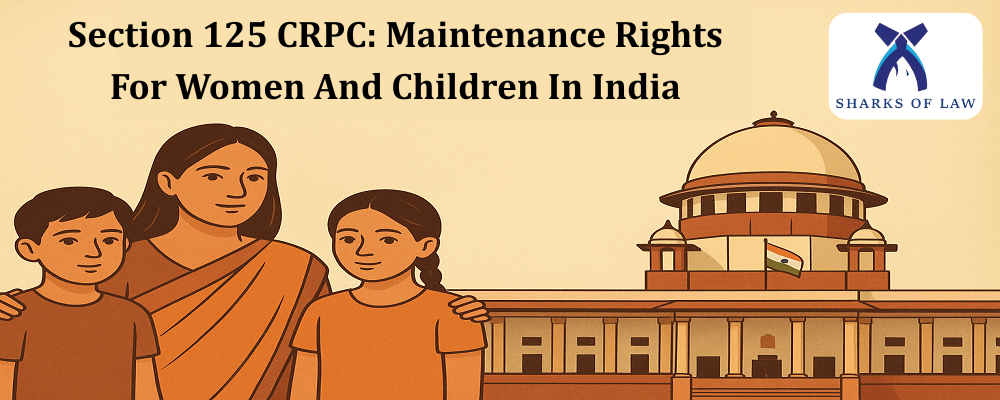
Within the framework of matrimonial disputes, Section 125 of the Indian Criminal Procedure Code (CrPC) is a significant provision designed to provide maintenance to parents, spouses, and children who are not able to maintain themselves. However, there is controversy with regard to how this provision should be applied in the setting of divorce actions, which frequently reveals its limited application.
Scope Of Section 125 CrPC
- The Criminal Procedure Code's Section 125 provides for the maintenance of the spouse, child, and guardians. When a party summons the court under the scope of section 125 crpc, the respondent, the spouse, may be assigned to provide monthly maintenance to the wife, who is unable to care for herself.
- In order to provide support for the marriage, the husband must be able to support his partner after the divorce, and the wife cannot live adultery or independently with her partner for any valid cause.
- The spouse won't be eligible for any type of maintenance at that moment, regardless of whether they are living apart or in common consent.
- The court must make sure that the husband has sufficient intentions to provide for his wife at the time the spouse's judgment is rendered. The court must also make sure that the divorcing spouse requires additional money to support herself after the divorce.
Why in the News?
The Allahabad High Court in the case of Rajni Rani v State of UP, held that the Court's authority under Section 125 CrPC. is restricted to matters pertaining to maintenance in matrimonial disputes, and that the Court is not permitted to enlarge the purview of this Section in order to grant a divorce decree through mutual agreement between the parties. The Court reaffirmed that jurisdiction cannot be granted by permission of the parties if it is not otherwise granted by law.
Facts of the Case:
- The second wife (Rajni Rani) of a deceased government employee (Bhojraj Singh) filed an appeal.
- She claimed that her husband's first marriage had been legally dissolved through a compromise in accordance with Section 125 of the CrPC.
- Therefore, the appeal was regarding the entitlement of pension to second wife.
The Decision by the Allahabad High Court:
- Section 125 CrPC restricts the scope of the proceedings concerning maintenance in matrimonial disputes to determining the amount of maintenance due.
- The court further declared that acquiescence to these kinds of compromises or separation agreements is meaningless in these situations.
- It stated that the court's authority in proceedings under Section 125 CrPC is limited to making maintenance determinations.
- The bench determined that the couples' marriage could only be dissolved by a suitable decision issued by the proper court because it was governed by the terms of the Hindu Marriage Act, 1955.
A single judge bench of the high court dismissed the second wife's complaint, stating that Section 125 of the CrPC couldn't have been applied to dissolve the legally binding union of the deceased government employee and his first wife.
The division bench maintained the single judge bench's ruling and declined to impede the first wife's ability to receive a family pension and discard the entitlement of pension to second wife.
A handy place to get trending legal news on a variety of legal topics is Sharks of Law. You are allowed to browse through various news updates at any time that is convenient for you. To get updates on more posts like this one, follow Sharks of Law.
Sharks of Law is a one-stop legal resource for matrimonial lawyers with the best credentials in various matrimonial laws. Your legal demands can be best met when you find a lawyer at Sharks of Law. When it comes to matrimonial matters, Sharks of Law's legal experts have the right experience needed to provide you with the right legal consultation.
Email:-helpdesk@sharksoflaw.com
Help Desk:-+91-88770-01993

Adv Vipul Singh Raghuwanshi
Legal expert and contributor at Sharks of Law. Committed to providing clear and accessible legal guidance to everyone.