Finding a Court marriage lawyer and hiring them for a court marriage guarantees and highlights a seamless as well as a compliant legal procedure. Their utmost knowledge as well as their direction makes it more easier to handle the most intricate and complex legal formalities, freeing couples to concentrate and rely more upon the importance of their union without any needless worry or any hassle.
Consult Verified Legal Experts

- • Bail Matter
- • Property Matter
- • Corporate Issues
Experience

- • Employment Matters
- • RERA Matters
- • Cyber Fraud
Experience

- • Adoption & Custody
- • Insurance Matters
- • Audits
Experience

- • Insurance Matters
- • Case Transfer Matters
- • Statutory Compliances
Experience

- • Employment Matters
- • Case Transfer Matters
- • Cyber Crime
Experience

- • Adoption & Custody
- • RERA Matters
- • Audits
Experience

- • Bail Matter
Experience

- • Mutual or Contested Divorce
Experience

- • Agreements
- • Court Marriage
- • Employment Matters
Experience

- • Court Marriage
- • Employment Matters
- • Cyber Fraud
Experience

- • Adoption & Custody
- • Insurance Matters
- • Cyber Fraud
Experience

- • Adoption & Custody
- • Insurance Matters
- • Anticipatory Bail
Experience

- • Adoption & Custody
- • RERA Matters
- • Statutory Compliances
Experience

- • Adoption & Custody
- • RERA Matters
- • Cyber Fraud
Experience

- • Statutory Compliances
- • Audits
- • Rape & POCSO
Experience

- • Court Marriage
- • Cyber Crime
- • Anticipatory Bail
Experience

- • Adoption & Custody
Experience

- • Corporate Issues
Experience

- • Employment Matters
- • RERA Matters
- • Case Transfer Matters
Experience

- • Rape & POCSO
Experience

- • Insurance Matters
Experience

- • Corporate Issues
Experience

- • Adoption & Custody
Experience

- • Corporate Issues
Experience

- • Insurance Matters
Experience

- • Adoption & Custody
Experience

- • Startup Compliances
Experience

- • Property Matter
Experience

- • Mutual or Contested Divorce
Experience

- • Rape & POCSO
Experience

- • Adoption & Custody
Experience

- • Cyber Fraud
- • Rape & POCSO
- • Anticipatory Bail
Experience

- • Anticipatory Bail
- • Bail Matter
- • Case Transfer Matters
Experience

- • Cyber Fraud
- • Rape & POCSO
- • Bail Matter
Experience

- • Agreements
- • Audits
- • Trademark & other IP
Experience

- • Cyber Fraud
- • Rape & POCSO
- • Bail Matter
Experience

- • Court Marriage
- • Adoption & Custody
- • Mutual or Contested Divorce
Experience

- • Court Marriage
- • Adoption & Custody
- • Mutual or Contested Divorce
Experience

- • Audits
- • Trademark & other IP
- • Company Registration
Experience

- • Anticipatory Bail
- • Money Recovery
- • Cheque Bounce
Experience

- • Money Recovery
- • Cheque Bounce
- • Matrimonial Disputes
Experience

- • Cyber Fraud
- • Rape & POCSO
- • Bail Matter
Experience

- • Insurance Matters
- • Cyber Fraud
- • Rape & POCSO
Experience

- • Court Marriage
- • Adoption & Custody
- • Mutual or Contested Divorce
Experience

- • Cyber Fraud
- • Rape & POCSO
- • Bail Matter
Experience

- • Anticipatory Bail
- • Money Recovery
- • Cheque Bounce
Experience

- • RERA Matters
- • Case Transfer Matters
- • Succession Issue
Experience

- • Consumer Protection
- • Legal Notice
- • Succession Issue
Experience

- • Insurance Matters
- • Cyber Fraud
- • Rape & POCSO
Experience

- • Agreements
- • Employment Matters
- • Statutory Compliances
Experience

- • Anticipatory Bail
- • Money Recovery
- • Cheque Bounce
Experience

- • Court Marriage
- • Adoption & Custody
- • Rape & POCSO
Experience

- • Agreements
- • Employment Matters
- • Statutory Compliances
Experience

- • Court Marriage
- • Adoption & Custody
- • Mutual or Contested Divorce
Experience

- • Cyber Crime
- • Anticipatory Bail
- • Money Recovery
Experience

- • Agreements
- • Employment Matters
- • Trademark & other IP
Experience

- • Money Recovery
- • Cheque Bounce
- • Legal Notice
Experience

- • Court Marriage
- • Adoption & Custody
- • Mutual or Contested Divorce
Experience

- • RERA Matters
- • Legal Notice
- • Succession Issue
Experience

- • Anticipatory Bail
- • Money Recovery
- • Cheque Bounce
Experience

- • Agreements
- • Employment Matters
- • Statutory Compliances
Experience

- • Property Matter
- • Corporate Issues
- • Startup Compliances
Experience

- • Cyber Crime
- • Anticipatory Bail
- • Money Recovery
Experience

- • Audits
- • Trademark & other IP
- • Company Registration
Experience

- • Anticipatory Bail
- • Money Recovery
- • Cheque Bounce
Experience

- • Cyber Crime
- • Money Recovery
- • Cheque Bounce
Experience

- • RERA Matters
- • Consumer Protection
- • Legal Notice
Experience

- • RERA Matters
- • Case Transfer Matters
- • Legal Notice
Experience

- • Anticipatory Bail
- • Money Recovery
- • Cheque Bounce
Experience

- • Cyber Crime
- • Legal Notice
- • Succession Issue
Experience

- • Court Marriage
- • Adoption & Custody
- • Mutual or Contested Divorce
Experience

- • Cyber Fraud
- • Rape & POCSO
- • Bail Matter
Experience

- • Consumer Protection
- • Legal Notice
- • Succession Issue
Experience

- • RERA Matters
- • Case Transfer Matters
- • Cyber Crime
Experience

- • Court Marriage
- • Adoption & Custody
- • Mutual or Contested Divorce
Experience

- • Agreements
- • Employment Matters
- • Statutory Compliances
Experience

- • Cyber Fraud
- • Rape & POCSO
- • Bail Matter
Experience

- • Cyber Fraud
- • Property Matter
- • Corporate Issues
Experience

- • Agreements
- • Employment Matters
- • Statutory Compliances
Experience

- • Insurance Matters
- • Cyber Fraud
- • Property Matter
Experience

- • Cyber Fraud
- • Property Matter
- • Corporate Issues
Experience

- • Insurance Matters
- • Cyber Fraud
- • Rape & POCSO
Experience

- • Insurance Matters
- • Cyber Fraud
- • Corporate Issues
Experience

- • Court Marriage
- • Adoption & Custody
- • Mutual or Contested Divorce
Experience

- • Agreements
- • Employment Matters
- • Audits
Experience

- • Agreements
- • Employment Matters
- • Statutory Compliances
Experience

- • Court Marriage
- • Adoption & Custody
- • Bail Matter
Experience

- • Court Marriage
- • Adoption & Custody
- • Rape & POCSO
Experience

- • Matrimonial Disputes
- • Legal Notice
- • Succession Issue
Experience

- • Case Transfer Matters
- • Anticipatory Bail
- • Money Recovery
Experience

- • Cyber Crime
- • Money Recovery
- • Cheque Bounce
Experience

- • Insurance Matters
- • Rape & POCSO
- • Bail Matter
Experience

- • Court Marriage
- • Adoption & Custody
- • Mutual or Contested Divorce
Experience

- • Court Marriage
- • Adoption & Custody
- • Mutual or Contested Divorce
Experience

- • Rape & POCSO
- • Bail Matter
Experience

- • Agreements
- • Employment Matters
- • Statutory Compliances
Experience

- • Court Marriage
- • Adoption & Custody
- • Mutual or Contested Divorce
Experience

- • Agreements
- • Court Marriage
- • Adoption & Custody
Experience

- • Agreements
- • Employment Matters
- • RERA Matters
Experience

- • Employment Matters
- • Cyber Fraud
- • Cyber Crime
Experience

- • Employment Matters
- • Insurance Matters
- • Cyber Fraud
Experience

- • Adoption & Custody
- • Employment Matters
- • Insurance Matters
Experience

- • Bail Matter
Experience

- • Rape & POCSO
Experience

- • Insurance Matters
Experience

- • Adoption & Custody
Experience

- • Court Marriage
Experience

- • RERA Matters
- • Case Transfer Matters
- • Cyber Crime
Experience

- • Rape & POCSO
Experience

- • Insurance Matters
Experience

- • Rape & POCSO
Experience

- • Adoption & Custody
Experience

- • Property Matter
Experience

- • Property Matter
Experience

- • Adoption & Custody
Experience

- • Insurance Matters
Experience

- • Employment Matters
- • Insurance Matters
- • RERA Matters
Experience

- • Court Marriage
- • Adoption & Custody
- • Legal Notice
Experience

- • Cyber Crime
- • Rape & POCSO
- • Anticipatory Bail
Experience

- • Rape & POCSO
- • Bail Matter
- • Legal Notice
Experience

- • Employment Matters
- • Company Registration
- • Legal Notice
Experience

- • Cyber Fraud
- • Cyber Crime
- • Legal Notice
Experience

- • Employment Matters
- • Insurance Matters
- • Legal Notice
Experience

- • Adoption & Custody
- • Matrimonial Disputes
- • Legal Notice
Experience

- • Court Marriage
- • Rape & POCSO
- • Matrimonial Disputes
Experience

- • Anticipatory Bail
- • Audits
- • Cheque Bounce
Experience
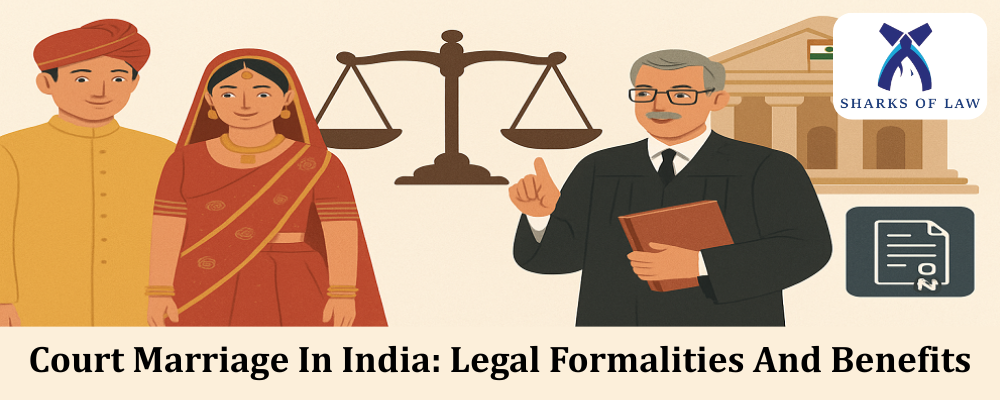
In the lightning-fast city of Delhi, where love has no limitations and cultures come together, court marriages have become an increasingly popular decision for couples wishing to tie their knots. Court marriages are a simple and legally recognized alternative for traditional weddings, whether the couple wants to avoid complications or exercise their right to seclusion. However, without appropriate assistance, navigating the legal maze may be intimidating.
Court Marriage: About
- In India, court marriages are frequently performed in accordance with the Special Marriage Act of 1954.
- There is no caste, colour, religion, or creed discrimination in the execution of a court marriage. Couples who practice two distinct religions are also qualified for a court marriage.
- A court marriage is merely the legal solemnization of a marriage. It is also possible for people of different classes and religions to wed in court.
- Interested parties can apply straight to the Marriage Registrar to get a certificate of marriage.
Court Marriage under Special Marriage Act: Eligibility
- There isn't a live spouse for the bride and groom.
- The prospective bride and groom must not suffer from a mental illness that would render them unfit for marriage and childrearing, nor have they experienced repeated episodes of insanity.
- They must also be able to give valid consent and not be incapable of giving it due to an unsound state of mind.
- The bride must have completed 18 years of age, and the groom must have completed 21 years of age.
- The bride and groom do not fall under the parameters of a prohibited relationship.
Court Marriage under Special Marriage Act: Essential Requirements of Documents
- Each of the parties should sign the application.
- proof of the parties' birth dates.
- evidence of both parties' residences.
- A pair of passport-sized photos of the couple.
- Death certificate or, in the event that the parties were married before, the divorce decree.
- acceptance of the funds paid for the District Court application form.
- Affirmation by the parties stating they are not related in the sense that the Special Marriage Act defines a forbidden relationship.
Court Marriage under Special Marriage Act: Procedure
Notification of Marriage
- The parties must first give notification to the district marriage registrar. In order to get married, the parties must inform the marriage registrar in writing and follow the procedure given in the Second Schedule.
Publication of the Notification
- The marriage registrar shall publish the notice and post it in a conspicuous place within his office. Any objections must be made within 30 days of the notice being published. If there are no objections, the marriage registrar may execute the marriage.
Opposition to the Marriage
- Anyone may object to a court marriage under section 7 within 30 days if they believe the marriage would violate any of the requirements outlined in section 4 of the act.
- Section 8 makes it mandatory that the Marriage Officer must look into any objections within 30 days of receiving those objections, and if the objections do not stop or halt the marriage from happening, to perform the ceremony as soon as possible.
Affirmation by the Witnesses and the Parties
- In a court marriage, three witnesses must witness the marriage before it is formally consummated. It is necessary for both spouses and three witnesses to sign and declare in the manner outlined in the Third Schedule in front of the marriage officer.
Marriage Certificate
- After all of these steps are finished, the marriage certificate will be issued by the marriage registrar. This certificate must also be signed by the parties, three witnesses, and themselves. This kind of certificate serves as proof positive of the court marriage.
Role of Court Marriage Lawyer: Sharks of Law
- Being a court marriage lawyer can be a really interesting job.
- From submitting an application to confirming paperwork, the legal counsel has a lot of duties.
- The Court marriage lawyers in Delhi onboarded at Sharks of Law also counsel the parties on the specifics of the registration procedure.
- One of the court marriage lawyer's essential duties still continues to prepare and call witnesses.
- In place of professional fees, a court marriage lawyer onboarded at Sharks of Law provides a professional service.
- In addition, everyone who intends to get married in court should get in touch with a court marriage lawyer beforehand to learn about the specifics of the service.
Sharks of Law is a one-stop legal destination of repository of court marriage lawyers in Delhi expertise in marriage laws possessing the highest legal qualifications in court marriage matters. You can find a lawyer who satisfies your legal needs with this matrimonial law firm. The legal professionals at Sharks of Law have the necessary experience to offer you legal consultation in the areas of court marriage matters where you need it.
Email:-helpdesk@sharksoflaw.com
Help Desk:-+91-88770-01993

Adv Vipul Singh Raghuwanshi
Legal expert and contributor at Sharks of Law. Committed to providing clear and accessible legal guidance to everyone.